
The Best Dining Places in Delhi, Organised by What You Actually Need

The Best Dining Places in Delhi, Organised by What You Actually Need

Last Update : 2026 | Author : Travel & Hospitality Content Team

Delhi has over 100,000 registered food outlets. The problem was never scarcity. It was that every 'best restaurants in Delhi' list treats a ₹80 puri at Sita Ram Diwan Chand and a ₹4,500 tasting menu at Indian Accent as entries on the same list as if they compete for the same meal occasion. They don't. The best dining place in Delhi depends entirely on who you're with, what you're celebrating (or recovering from), and how much you're willing to spend.

This guide cuts through that noise. Instead of ranking 50 restaurants you'll never visit, it maps Delhi's dining landscape by occasion, fine dining, budget, couples, rooftop, location, and experience and tells you the tradeoffs nobody mentions. By the end, you'll know exactly where to go and, just as usefully, what to avoid doing once you get there.


What 'Best' Actually Means in Delhi's Restaurant Scene

Most people searching for the best restaurants in Delhi make one foundational mistake: they conflate reputation with suitability. Indian Accent consistently tops national rankings it earned a spot among Asia's 50 Best Restaurants and remains the city's most decorated fine dining address. But if you're taking your in-laws for a Saturday lunch or organising a college reunion of 12, Indian Accent is the wrong choice regardless of how good the food is. The tasting menu is intimate, slow, and expensive by design.

Delhi's dining scene divides cleanly into four tiers: legacy fine dining (Dum Pukht at ITC Maurya, Wasabi by Morimoto at the Taj Mahal Hotel), contemporary fine dining (Indian Accent, Masque pop-ups, Farzi Cafe's tasting evenings), midrange reliable (Grammar Room, Guppy, QBA), and budget-faithful (Moolchand Parantha, Sita Ram Diwan Chand, Paranthe Wali Gali in Old Delhi).

Each tier has its own booking rules, walk-in culture, and unwritten etiquette. The fine dining tier requires advance reservations, often 2–3 weeks for Indian Accent on weekends. The budget tier punishes reservations; the experience at Moolchand depends on arriving hungry at 8 PM and eating standing up. Treating a budget landmark with fine-dining expectations, or walking into a Michelin-aspirant kitchen without a reservation, produces the frustration that fuels one-star reviews not bad food.

The more useful question is not 'what's the best restaurant in Delhi' but 'what's the best restaurant for this specific dinner.' Answering that requires knowing the tier, the area, and the occasion first.

The Reservation Mistake Most Delhi Diners Make

Here is a scenario that plays out every weekend across Delhi: someone decides Thursday afternoon to take a partner to ROOH in Mehrauli for a Saturday dinner, the one with the rooftop terrace and the view of Qutub Minar. They arrive at 8:30 PM to find the terrace fully booked. The indoor seating is available, but the view, the lighting, and the occasion they planned for are gone.

The mistake wasn't bad timing. It was not clear which restaurants reward walk-ins and which ones require forward planning specific to their best feature, not just their name.

Restaurants in Delhi's top dining places fall into three reservation categories. First, the always-book category: Indian Accent (book 2–3 weeks ahead for weekend dinner), Dum Pukht (often full on Thursday–Saturday evenings), and Lakhori Haveli Dharampura in Chandni Chowk, whose rooftop fills by 7 PM most evenings. Second, the feature-specific booking category: ROOH's terrace, Parikrama's window seats facing Rashtrapati Bhawan, and Thai High's Qutub Minar view tables all require individual seat/section requests during reservation, not just a table booking. Third, the walk-in friendly category, where queuing is part of the experience: most budget dining places in Delhi, like Kake Da Hotel, Sita Ram Diwan Chand, and Nathu's.

The actionable rule is this: if the view, the rooftop, or the specific ambience is your reason for choosing the restaurant, book that feature explicitly. Booking a table at Parikrama without requesting a window seat could mean sitting in the interior. The view is the point.

How to Choose: A Framework for Every Occasion

Rather than a ranked list, think of Delhi's best dining places in terms of four variables: budget per head, occasion type, neighbourhood preference, and how much the experience matters versus the food alone. Running those four filters gives a cleaner answer than any single ranking.


Option / Category

Best For

Key Tradeoff

Indian Accent (Lodhi Hotel)

Special occasions, food enthusiasts, impressing guests

High cost (₹4,000–6,000/head), requires advance booking, no flexibility with dietary restrictions

Dum Pukht (ITC Maurya)

Legacy fine dining, Mughlai cuisine, formal dinners

Very formal atmosphere, slow service by design, menu is narrow if you're not a meat-eater

Farzi Cafe (Connaught Place)

Date nights, group dining, Instagram-worthy food

Popular = crowded on weekends; molecular gastronomy style not for everyone; rooftop loud after 9 PM

ROOH (Mehrauli)

Romantic dinners, intimate couples dining, cocktail-forward

Small portions, terrace books out fast, pricier than its casual exterior suggests

Lakhori, Haveli Dharampura

Cultural experience, heritage dining, Old Delhi atmosphere

Location requires navigating Chandni Chowk lanes; menu is limited; limited vegetarian options at rooftop

Moolchand Parantha / Street Circuit

Budget dining, authentic Delhi food, solo or casual

No seating/ambiance; cash-only many places; very fast meal pace


The framework: if your budget is under ₹800 per head, the best dining places in Delhi are in Old Delhi and the dhaba circuits around Karol Bagh and Lajpat Nagar. Between ₹800–₹2,000, South Delhi's Hauz Khas Village, Mehrauli, and Greater Kailash dominate. Above ₹2,000, Connaught Place and the five-star hotel belt in Chanakyapuri–Janpath take over.

What Changes Depending on Where, When, and Who

Rooftop restaurants in Delhi work well between October and March. Delhi's air quality during the October–February period is a genuine consideration. A romantic rooftop dinner during peak smog season at Parikrama will deliver a brown-grey horizon rather than the city skyline you see in promotional photos. Parikrama's general manager has noted in interviews that the restaurant's window-cleaning schedule intensifies in winter precisely because visibility becomes the experience. Plan rooftop dining in Delhi for November onwards after the monsoon clears, or in February–March before the heat starts.

Timing also varies by area. Best restaurants in Connaught Place experience peak crowds between 8–10 PM on Friday and Saturday. Arriving at 7 PM at places like QBA or Unplugged Courtyard gets you the same terrace, the same menu, and shorter wait times. Best dining places in South Delhi, specifically Hauz Khas Village, are now primarily a nightlife destination after 9 PM; if you want food as the priority, arrive before 8 PM.

For couples, the romantic restaurants in Delhi that deliver most consistently are not the most obvious choices. ROOH, Thai High near Qutub Minar, and Grammar Room in Defence Colony offer intimacy at a much lower decibel level than the heavily Instagrammed Farzi Cafe or Lord of the Drinks, which are better for groups.

Common Mistakes at Delhi's Top Restaurants (and Their Real Consequences)

Ordering without checking the menu's direction. A common error at Farzi Cafe is ordering standard North Indian dishes, paneer tikka, and dal makhani, expecting the same preparation you'd get at a dhaba. Farzi's kitchen works with molecular gastronomy techniques; their Dal Chawal Arancini is an Italian-Indian hybrid, not comfort dal. Ordering expecting comfort food and getting a deconstructed version produces genuine disappointment, not bad cooking. The menu description is the guide, not the dish name.

Choosing a restaurant based on a Zomato rating without checking the rating's review vintage. Delhi's restaurant scene turns over quickly. A place with 4.5 stars accumulated over three years may have had a chef change, a location shift, or a menu overhaul in the past six months. ROOH relocated and rebranded; Guppy in Lodhi Colony changed ownership. Ratings that predate major changes are unreliable signals. Look for reviews dated within the last 90 days specifically.

Booking luxury dining in Delhi on annual occasions without confirming the current pricing. Menu prices at Delhi's five-star properties shift seasonally, and special occasion surcharges (New Year's Eve, Valentine's Day) can triple the cost of a standard dinner. A couple visiting Threesixtyone Degrees at the Oberoi on Valentine's Day, expecting to spend ₹6,000 total will find a fixed menu starting at ₹7,000 per head minimum. Confirming current pricing with the restaurant directly not third-party aggregators prevents the most expensive surprises.


The Restaurants Nobody Puts on Lists — But Should

Every curated list of top restaurants in Delhi reaches for the same dozen names. Here is the category most lists skip entirely: mid-heritage dining places that are neither street food nor fine dining but carry decades of institutional knowledge in their kitchens.

Kake Da Hotel near Connaught Place has been serving butter chicken and roomali roti since 1931. The dining room is sparse, the lighting harsh, and there is no ambience to speak of. The food is, without exaggeration, among the most consistent butter chicken you will eat in Delhi because it has been made by the same family across four generations using a recipe that predates the restaurant tourism industry. It costs around ₹600 for two with a full meal.

Wangchuk's in Lajpat Nagar occupies a similar category for Ladakhi food, the oldest Ladakhi kitchen in Delhi, beloved by everyone who discovers it and rarely mentioned in mainstream restaurant roundups. Their thukpa and momos are made from recipes brought directly from Leh, and the owner personally explains the origins of each dish.

Affordable restaurants in Delhi at this tier deliver something luxury dining cannot: the specificity of tradition. Indian Accent's menu is deliberately borderless; it innovates across regional cuisines. Kake Da Hotel cooks one cuisine, with one recipe, for one century. For a visitor or a Delhiite who wants to understand the city through food, that specificity is irreplaceable.


From the Field: What Seasoned Delhi Diners Know

The honest limitation of any 'best restaurants in Delhi' list is this: Delhi's restaurant scene has a churn problem. Openings and closures happen at a pace no static list can track. Between 2022 and 2024, several places that featured prominently in major roundups either shut down, changed concepts, or shifted to delivery-only. Grammar Room changed location. Multiple Hauz Khas Village spots that topped 2021 lists are now unrecognisable.

The guidance that holds regardless of turnover: prioritise restaurants attached to institutions rather than standalone concepts. ITC Maurya's Dum Pukht, the Oberoi's Threesixtyone, the Taj's Wasabi by Morimoto these kitchens have structural continuity. The executive chef changes, but the standard, the sourcing infrastructure, and the institutional investment in quality don't. For standalone restaurants, the safest signal is whether the head chef's name is publicly associated with the restaurant and whether they're verifiably still there.

For budget dining, the rule is opposite: prioritise family-run over branded. Delhi's best affordable restaurants in Delhi are almost uniformly multigenerational Kake Da, Sita Ram Diwan Chand, and Nathu's in Bengali Market. The moment a budget favourite goes corporate or franchises, the quality averaging begins.

A Note on Hotel Dining: When You Want Reliability Over Experimentation

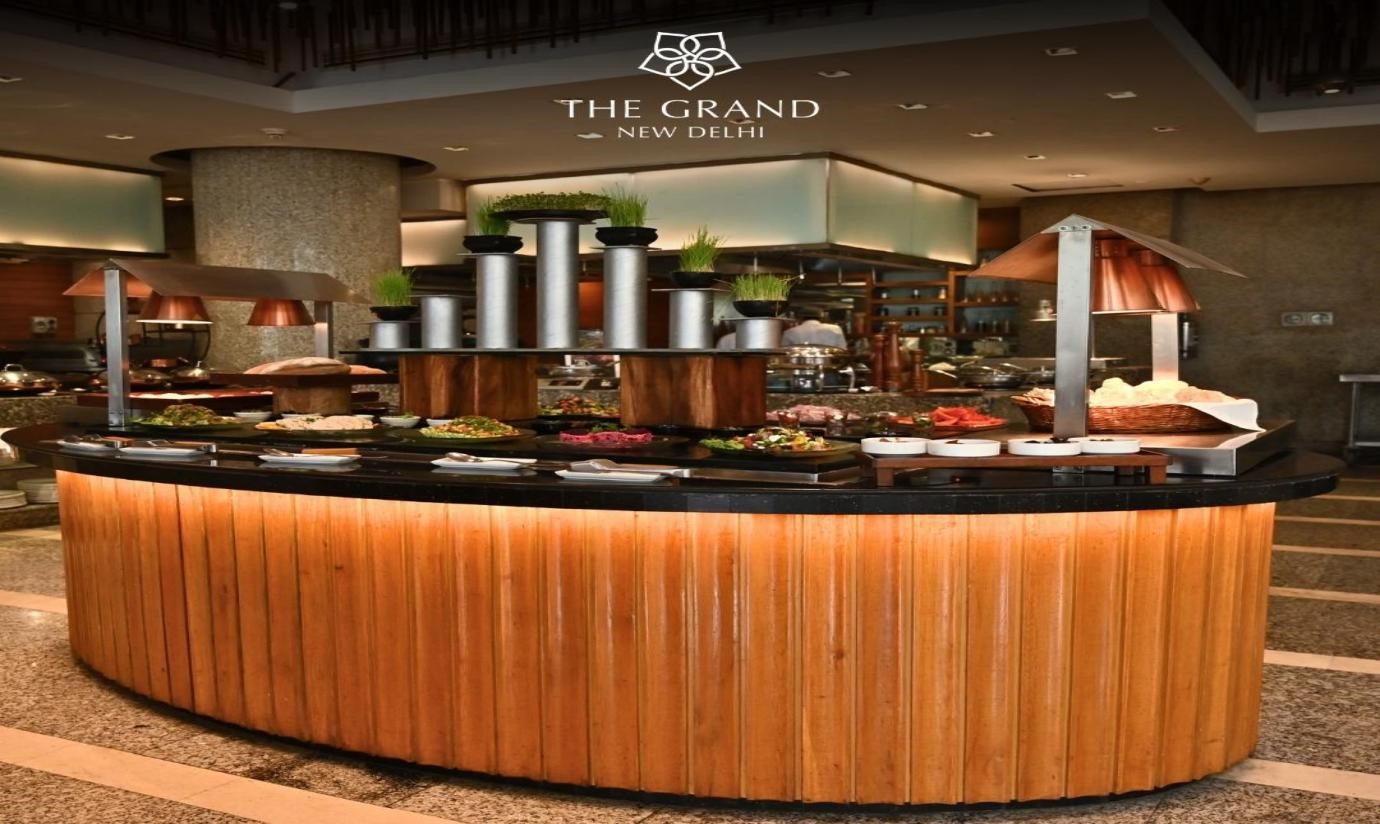
There’s a category that doesn’t get enough attention in most “best dining places in Delhi” lists: hotel restaurants that prioritise consistency over trend-driven menus. Places like The Grand New Delhi in Vasant Kunj sit in a different lane altogether. You won’t find molecular experiments or Old Delhi chaos here what you get instead is predictable quality, spacious seating, and service that’s built for longer, more comfortable meals.

For business lunches, family dinners with mixed preferences, or occasions where the environment matters as much as the food, this category often outperforms standalone restaurants. The tradeoff is that these places rarely trend on Zomato or Instagram but that’s also why they remain reliable when trendier spots fluctuate in quality [source].

Frequently Asked Questions

1. How much should I budget for a fine dining meal in Delhi?

Fine dining in Delhi ranges from ₹2,000–₹3,500 per head at places like Farzi Cafe and ROOH to ₹4,500–₹7,000+ per head at Indian Accent and Dum Pukht. The upper range increases significantly on special occasions Valentine's Day, New Year's Eve — when fixed menus replace the regular à la carte. Budget at least 20% above the listed average cost per head to account for service charges and taxes, which are now included post-GST but vary by establishment.

2. Rooftop restaurant vs. fine dining in Delhi — which is worth it?

They serve different purposes and shouldn't be compared directly. Rooftop restaurants in Delhi — Thai High, ROOH, Parikrama, QBA deliver on experience, views, and ambiance; the food is secondary. Fine dining like Indian Accent is the opposite: the room is beautiful but the meal itself is the event. For a first date or anniversary, a rooftop wins on atmosphere. For a food enthusiast or a client dinner where the food will be discussed, fine dining wins. The mistake is choosing a rooftop because you want great food, or fine dining, because you want Instagram photos.

3. Is it safe to eat street food near Connaught Place?

Delhi street food near CP is generally safe if you follow two rules: eat at stalls with high turnover (the busier, the safer food sits less), and avoid cut fruit or items with raw water-based chutneys during the monsoon months of July–September. The gol gappa stalls near Palika Bazaar, the aloo tikki near the inner circle, and the chaat at Bengali Market (a 10-minute walk from CP) have served lakhs of diners for decades without meaningful public health incidents. High crowd volume is your quality signal, not the appearance of the stall.

4. Do I need to reserve a table at budget restaurants in Delhi?

Almost never, and at some places, reservations are not accepted. Delhi's best budget restaurants Kake Da Hotel, Moolchand Parantha, and the dhabas around Karol Bagh, operate on a walk-in, first-come basis. The queue itself is part of the cultural experience. The only exception is Sita Ram Diwan Chand in Paharganj, which occasionally sees long morning lines on weekends; arriving by 9 AM avoids the wait. Attempting to call ahead at these places rarely works and can confuse staff not set up for reservation management.

5. Which Delhi neighbourhood has the best concentration of restaurants?

For sheer variety across budgets, Connaught Place remains unmatched — it has everything from century-old Wenger's Bakery to Farzi Cafe's molecular kitchen within walking distance. For curated quality in a single evening (rooftop + dinner + bar), best dining places in South Delhi's Mehrauli–Qutub corridor and Hauz Khas Village win. For heritage and cultural dining, Chandni Chowk's Paranthe Wali Gali and Lakhori Haveli Dharampura are irreplaceable. For fine dining concentration, the Chanakyapuri–Janpath hotel belt has the highest density of five-star restaurants.

6. Are Delhi's fine dining restaurants good value for money?

Relative to comparable restaurants in London or Singapore, yes Indian Accent at ₹6,000 per head delivers Michelin-quality cooking at roughly 40% of what a similar experience would cost in those cities. Within the Delhi context, they represent luxury pricing. The value calculation depends on what you're benchmarking against. As a special occasion meal for a couple, ₹12,000 total for the best cooking in the country's most exciting dining city the value is genuine. As a regular dining choice, the budget restaurant circuit is the smarter use of money.

7. Does the best dining place in Delhi differ for a vegetarian?

Meaningfully, yes. Dum Pukht is heavily meat-centric — its signature slow-cooked dishes are built around biryani and kebabs; the vegetarian options are an afterthought. Thai High and most Thai restaurants in Delhi skew meat-forward. Indian Accent, however, runs a parallel vegetarian tasting menu that is as thoughtfully constructed as the non-vegetarian version — this is unusual for a fine dining kitchen of its calibre. For purely vegetarian fine dining, Rajdhani in Connaught Place and the ITC hotels' Dum Pukht alternative menus are the most reliable options.

Plan Your Next Delhi Dinner

Whether you're planning a rooftop date night or a budget street food trail, knowing Delhi's dining geography saves you from expensive mistakes and forgettable meals. Subscribe to our Delhi food newsletter for monthly updates on new openings, seasonal menus, and reservation windows or explore our complete neighbourhood-by-neighbourhood guides to eat your way through the capital like a local.

WhatsApp