
Ganesh Chaturthi in Delhi: Pandals, Dates and a Complete Celebration Guide
Introduction
Mumbai and Pune are usually the first cities that come to mind when Ganesh Chaturthi is mentioned, but Delhi has built its own version of the festival over the decades. Waves of Maharashtrian, South Indian, and Gujarati communities settling across the capital have turned neighbourhoods such as RK Puram, Pitampura, and Connaught Place into genuine festival hubs each September, with pandals, processions, and community celebrations that run for the full ten days of Ganeshotsav.
This guide covers when Ganesh Chaturthi falls in 2026, the puja muhurat, the parts of Delhi known for the most significant celebrations, what a first-time visitor should expect, and where a comfortable South Delhi base fits into the picture for those attending from outside the city.
When Is Ganesh Chaturthi 2026 in Delhi?
Ganesh Chaturthi 2026 falls on Monday, September 14, with the auspicious Ganpati Sthapana muhurat generally observed between approximately 11:00 AM and 1:30 PM. The festival traditionally runs for ten days, concluding with Anant Chaturdashi and the visarjan (idol immersion) processions around September 23 to 25, 2026, depending on the specific tradition followed by each community and mandal.
Ganesh Chaturthi is not a public holiday in Delhi, unlike in Maharashtra. Offices, schools, and most businesses operate as usual on the day itself, though celebrations at homes, temples, and community pandals continue in the evenings throughout the festival period.
|
Detail |
2026 Information |
|
Ganesh Chaturthi (main day) |
Monday, September 14, 2026 |
|
Puja Muhurat (approximate) |
11:00 AM – 1:30 PM |
|
Festival duration |
10 days |
|
Anant Chaturdashi / Visarjan |
Around September 23–25, 2026 (varies by mandal) |
|
Public holiday status in Delhi |
Not a gazetted public holiday |
Where Ganesh Chaturthi Is Celebrated in Delhi
Delhi's Ganesh Chaturthi celebrations are spread across several neighbourhoods, each shaped by the community that historically settled there. The following areas are consistently associated with significant pandals and gatherings in recent years, though the specific organisers and idol themes change annually.
- RK Puram: Home to one of Delhi's oldest Ganesh Chaturthi celebrations, organised largely by South Indian communities. The atmosphere here leans traditional, with Vedic chanting and devotional music rather than large-scale spectacle.
- Connaught Place and Mandi House: Maharashtrian community associations, including gatherings linked to Maharashtra Sadan, bring an authentic Maharashtrian flavour to central Delhi, with dhol-tasha performances and regional delicacies.
- Pitampura: Known for some of the larger, more elaborate pandals in the city, occasionally featuring idols inspired by Mumbai's famous installations.
- Sarojini Nagar and Laxmi Nagar: Established community pandals with a mix of religious observance and cultural programming, including music and craft stalls.
For visitors planning a pandal visit, evenings after the Sandhya Aarti tend to be the most vibrant, though mornings offer a quieter setting for those who prefer to view the idols and decorations without the evening crowds.
What to Expect at a Ganesh Chaturthi Pandal
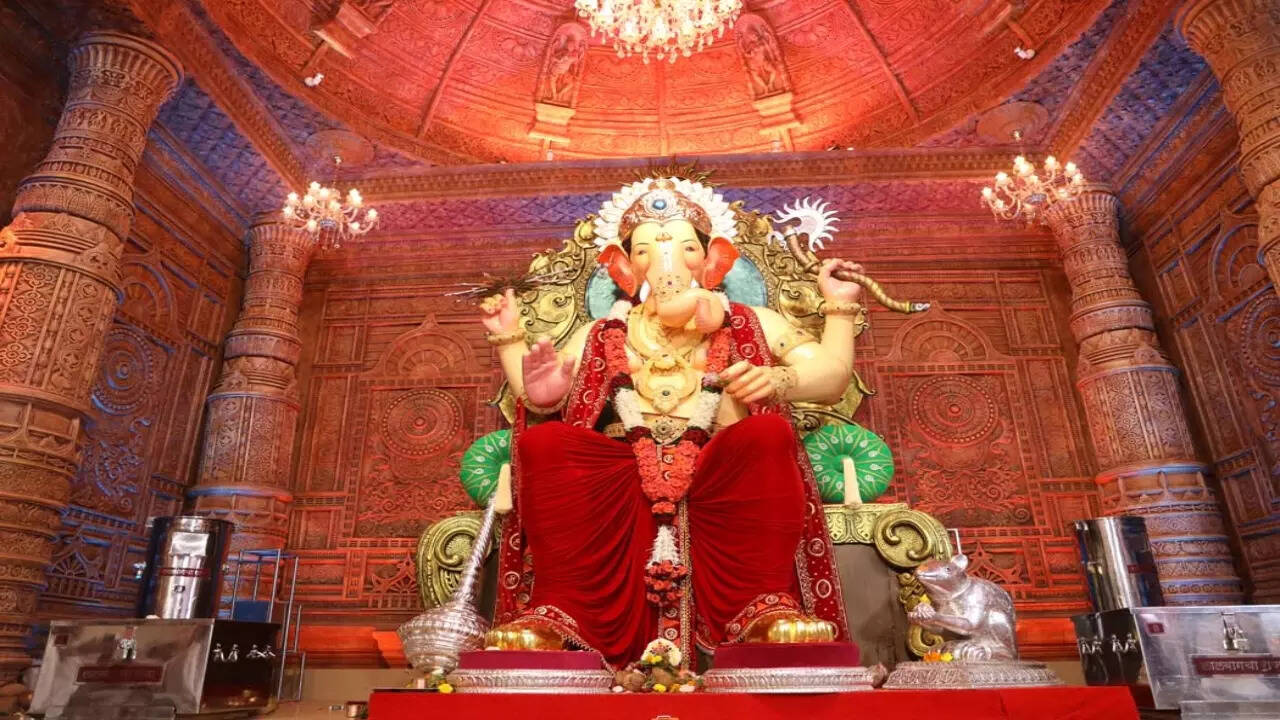
A typical Delhi pandal centres on a Ganesha idol installed on a raised, decorated platform, with daily aarti sessions, devotional music, and offerings of modak, believed to be Lord Ganesha's favourite sweet. Larger pandals often add cultural programming through the ten-day period, including dance performances, craft stalls, and food vendors serving festive snacks.
Many mandals in Delhi have shifted toward eco-friendly idols in recent years, made from clay rather than plaster of Paris, in keeping with environmental guidelines around immersion. Visitors interested in the more traditional, devotional side of the festival are generally better served by the older community pandals, while those looking for a larger cultural spectacle tend to gravitate toward the bigger installations in areas like Pitampura.
Visiting Etiquette and Practical Tips
- Evenings, particularly after Sandhya Aarti, are the busiest time at most pandals; arrive early if a quieter experience is preferred.
- Modest dress is appreciated at most pandals and temple visits, consistent with general temple etiquette across Delhi.
- Photography is usually welcome in public pandal areas, though visitors should check before photographing inside smaller temple premises.
- Traffic and parking near major pandals can be constrained during peak evening hours, particularly in the final days leading up to visarjan.
- Visarjan processions can cause temporary road closures on routes leading to immersion sites; travellers with fixed schedules should build in extra time on these days.
Ganesh Chaturthi Across Delhi's Communities
What distinguishes Delhi's celebration from Mumbai's is its layered, multi-community character. Rather than one dominant citywide tradition, Ganesh Chaturthi in Delhi is expressed through the specific communities that celebrate it: Maharashtrian associations bringing regional ritual and cuisine, South Indian communities in areas like RK Puram maintaining older, more devotional formats, and newer mixed-community pandals blending contemporary themes with traditional worship. For a visitor, this means the character of the festival can shift noticeably from one neighbourhood to the next, which is part of what makes pandal-hopping across the city worthwhile.
Where to Stay for a Ganesh Chaturthi Visit to Delhi
Several of Delhi's most established Ganesh Chaturthi celebrations, including RK Puram and Sarojini Nagar are located in South Delhi, making a South Delhi base a practical choice for visitors planning to attend multiple pandals over the festival period.
The Grand New Delhi, located in Vasant Kunj, offers a comfortable South Delhi base within reach of these South Delhi celebration hubs, along with the broader festival activity across the city. For visitors combining the festival with business or a longer stay, the property offers spacious rooms starting at 430 sq ft, multiple dining outlets including Cascades, DKK, WokTok, and GBar, and a full-service spa for winding down after an evening of pandal-hopping. Guests attending pandals further into central or east Delhi should factor in Delhi's evening festival traffic when planning travel time, particularly during the peak evening hours described above.
Explore The Grand New Delhi
→ View rooms and suites at The Grand New Delhi
→ Explore dining at The Grand New Delhi
Frequently Asked Questions
1. When is Ganesh Chaturthi 2026 in Delhi?
Ganesh Chaturthi 2026 falls on Monday, September 14, with the festival period continuing for ten days through Anant Chaturdashi, expected around September 23 to 25, 2026.
2. Is Ganesh Chaturthi a public holiday in Delhi?
No. Ganesh Chaturthi is not a gazetted public holiday in Delhi, though celebrations at pandals, temples, and community centres continue throughout the festival period regardless.
3. Which areas in Delhi have the most significant Ganesh Chaturthi celebrations?
RK Puram, Connaught Place and the Mandi House area, Pitampura, Sarojini Nagar, and Laxmi Nagar are consistently associated with well-established pandals and community celebrations
4. What is the best time of day to visit a Ganesh Chaturthi pandal in Delhi?
Evenings after Sandhya Aarti are the most lively, with music, cultural programming, and larger crowds. Mornings offer a quieter setting for viewing the idols and decorations.
5. Is Ganesh Chaturthi celebrated differently in Delhi compared to Mumbai?
Yes. Delhi's celebrations are shaped by its mix of communities rather than one dominant citywide tradition, giving the festival a more layered, neighbourhood-specific character compared to Mumbai's larger, more uniform public celebrations.
6. Where is a good base to stay for Ganesh Chaturthi celebrations in South Delhi?
South Delhi locations such as Vasant Kunj offer practical access to pandals in RK Puram and Sarojini Nagar, along with comfortable accommodation for visitors combining the festival with a longer stay in the city.