
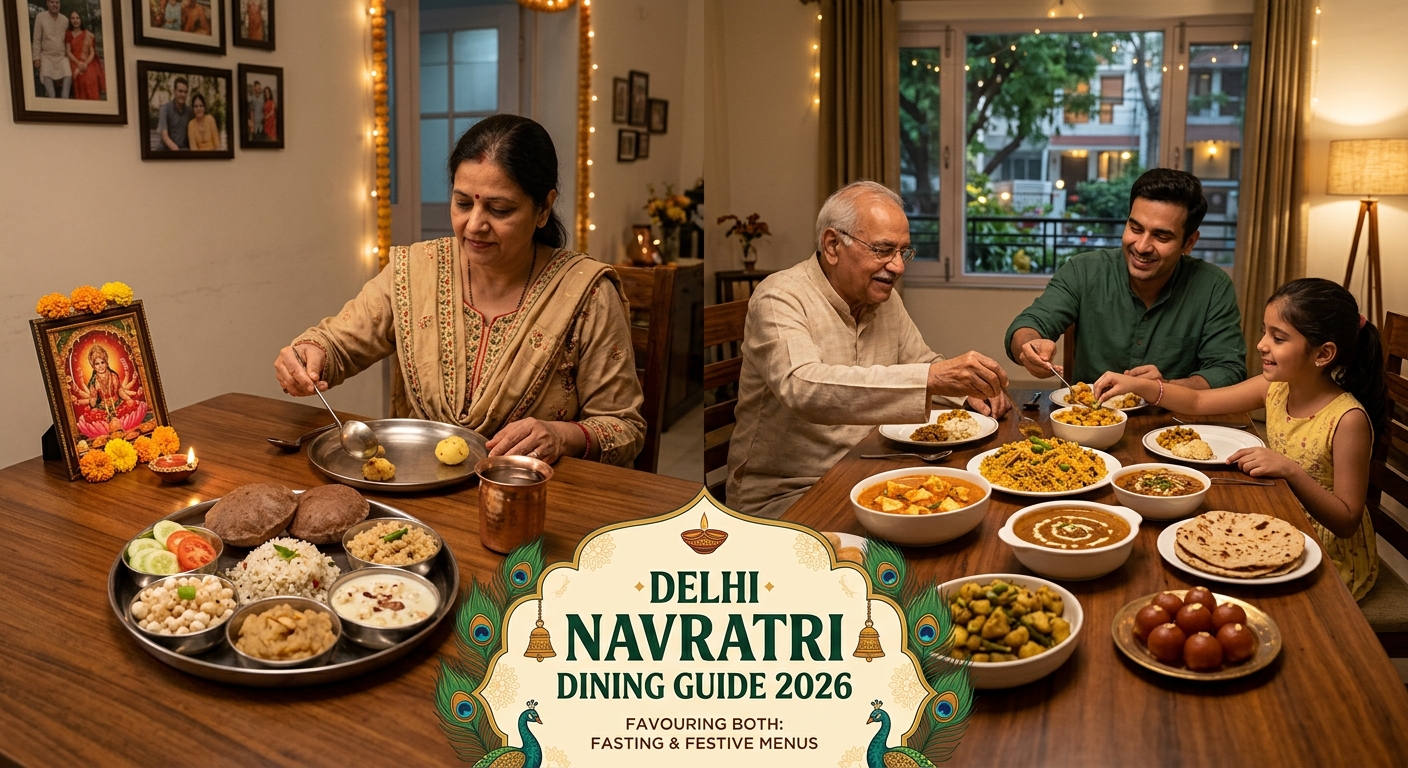
Navratri Dinner in Delhi 2026: A Practical Guide to Fasting & Festive Dining
Introduction
Navratri 2026 runs from Sunday, 11 October to Tuesday, 20 October, and for many households across Delhi, the nine nights are as much about food as they are about the puja itself. Some guests are observing a personal fast for the full period or on specific days; others are simply looking for a festive dinner to mark the occasion with family. The two needs are different, and a good Navratri dinner plan in Delhi accounts for both rather than treating the festival as a single, generic dining occasion.
This guide sets out what actually changes about dining during Navratri, what a fasting-friendly (vrat) menu typically includes, what to expect from a festive family dinner instead, and what to check before booking anywhere for the 2026 dates.
Navratri 2026: The Dates That Matter for Dinner Planning
|
Date (2026) |
Occasion |
Why It Matters for Dinner Plans |
|
Sunday, 11 October |
Ghatasthapana (Navratri begins) |
The first day many fasts begin; dinner reservations start seeing festival-specific requests from this date |
|
Monday, 19 October |
Durga Ashtami / Maha Navami |
The most heavily-booked evening of the period, often built around Kanya Pujan |
|
Tuesday, 20 October |
Dussehra / Vijayadashami |
Fasts typically end; many families mark the day with a celebratory, non-fasting family meal |
These dates follow the standard Hindu lunar calendar and can occasionally shift by a day depending on the source consulted; confirming the exact date of Ashtami and Navami closer to the festival is worth doing before finalising a group booking, since this is typically the busiest single evening for Navratri dining across the city.
What “Navratri Dinner” Actually Means in Delhi
Navratri dining in Delhi splits into three overlapping but distinct occasions, and knowing which one applies changes what to look for in a venue.
|
Dinner Type |
Who It Suits |
What to Expect |
|
Fasting (Vrat) Dinner |
Guests observing a Navratri fast, typically for all or some of the nine days |
Grain-free or specific-grain dishes (kuttu, singhare), rock salt (sendha namak) instead of regular salt, no onion or garlic, fruit and dairy-based dishes |
|
Festive Family Dinner |
Families and groups marking the festival without a personal fast |
A full multi-cuisine spread, a celebratory atmosphere, and often a group booking around Ashtami or Navami |
|
Kanya Pujan / Ashtami Dinner |
Families hosting or attending a Kanya Pujan on Ashtami or Navami |
A meal timed around the puja itself, often vegetarian by custom for the day, sometimes combined with a wider family gathering afterward |
Fasting-Friendly (Vrat) Dining: What's Typically on the Menu
A genuine Navratri vrat menu follows a specific set of conventions, not just “vegetarian food.” Understanding these helps in judging whether a venue's offering is actually fasting-appropriate:
- Grains are typically limited to kuttu (buckwheat) or singhare ka atta (water chestnut flour) rather than wheat or rice
- Regular table salt is usually replaced with sendha namak (rock salt)
- Onion and garlic are excluded from most traditional vrat preparations
- Common dishes include sabudana khichdi, kuttu ki puri or paratha, singhare ke pakode, and dishes built around paneer, potatoes, or fruit
- Dairy milk, curd, and paneer features heavily as a protein source through the fasting period
Not every household follows the same rules; some observe a stricter fast than others, and some fast only on specific days (typically the first and last, or Ashtami/Navami) rather than the full nine. When booking anywhere for a Navratri dinner while fasting, it is worth confirming directly with the venue whether a dedicated vrat menu is available on request, since not every restaurant keeps one prepared by default.
Festive Non-Fasting Dinners: What to Expect
For guests not observing a fast, Navratri dinner is closer to any other festival family gathering the occasion calls for a proper sit-down meal, often with extended family, rather than a specific dietary format. A multi-cuisine spread, a comfortable group setting, and availability on the Ashtami/Navami evening specifically tend to matter more than the menu following vrat rules.
Kanya Pujan on Ashtami or Navami is a common anchor point: many families host or attend the ritual in the late morning or afternoon, then move into a wider family dinner in the evening. Venues that can accommodate a larger group booking on that specific evening, with some flexibility on timing around the puja, tend to work best for this pattern.
What to Check Before Booking a Navratri Dinner in Delhi
- Whether a fasting-friendly (vrat) menu is available, and whether it needs to be requested in advance rather than being on the regular menu
- Whether onion and garlic can genuinely be excluded on request, for guests observing a stricter fast
- Group size the venue can comfortably seat together, particularly for Ashtami/Navami evening bookings
- Whether the venue gets significantly busier on specific days of the nine (Ashtami and Navami especially), and whether a reservation is required rather than walk-in
- Parking and access, particularly if the booking is a larger multi-generational family group
Common Mistakes When Planning a Navratri Dinner
- Assuming any 'vegetarian' menu automatically qualifies as vrat-friendly onion, garlic, and regular wheat or rice-based dishes are vegetarian but not fasting-appropriate
- Leaving a group booking for Ashtami or Navami evening until the last minute this is consistently the most heavily-booked night of the nine across the city
- Not confirming whether a venue can genuinely separate fasting and non-fasting orders within the same group booking, which matters when a family has mixed dietary needs at one table
- Overlooking timing around the Kanya Pujan ritual itself a dinner booked too early can clash with an afternoon puja still running long
Booking for a Larger Family or Group Gathering
Navratri dinners, particularly around Ashtami and Navami, are often multi-generational family occasions rather than a couple or a small group. This changes what matters in a venue: consistent seating for a larger party, a menu that can serve both fasting and non-fasting guests from the same table without a separate kitchen run for each, and enough flexibility on timing to accommodate a puja that may run later than planned.
For groups above a certain size, most venues will ask for advance notice sometimes several days ahead particularly if a dedicated fasting menu needs to be prepared separately from the regular kitchen line. Confirming the group size, the mix of fasting and non-fasting guests, and the intended arrival time when booking avoids last-minute adjustments on the evening itself.
The Grand New Delhi: Dining Options for Navratri 2026
The Grand New Delhi, in Vasant Kunj, South Delhi, has six dining and bar outlets across the property, offering enough variety for both a fasting-conscious meal and a full festive family dinner under one roof:
- DKK — Dilli Kanteen Kitchen: global cuisine blended with Indian cooking techniques
- Woktok: Pan-Asian dining spanning Japanese, Southeast Asian, and Chinese dishes
- Aqua: a poolside bar and Continental dining space
- Cascades: a lounge for tea, coffee, and beverages
- Indulge: a patisserie and gourmet boutique
- GBar: a cocktail bar and lounge
For guests observing a Navratri fast, dietary requests including a vrat-appropriate menu can be arranged directly with the restaurant team; confirming this ahead of the visit is recommended, particularly for a larger group booking on Ashtami or Navami evening.
Explore The Grand New Delhi
View dining at The Grand New Delhi
Explore events and celebrations at The Grand New Delhi
Frequently Asked Questions
1. When is Navratri 2026 in Delhi?
Navratri 2026 runs from Sunday, 11 October to Tuesday, 20 October, with Ashtami and Navami falling on Monday, 19 October, and Dussehra on Tuesday, 20 October.
2. What food is eaten during a Navratri fast?
A typical Navratri vrat diet uses kuttu (buckwheat) or singhare ka atta (water chestnut flour) instead of wheat or rice, sendha namak (rock salt) instead of regular salt, and excludes onion and garlic. Common dishes include sabudana khichdi, kuttu ki puri, and paneer or fruit-based preparations.
3. Can restaurants in Delhi provide a Navratri-friendly menu on request?
Many multi-cuisine restaurants and hotels can prepare a fasting-appropriate meal on request, though it is not always part of the standard daily menu. It is best to confirm directly with the venue in advance, especially for a group booking.
4. Is Ashtami or Navami the busiest day for Navratri dinner bookings in Delhi?
Yes. Ashtami and Navami, which fall on 19 October 2026, are typically the busiest evenings for Navratri dining in Delhi, often built around Kanya Pujan and a following family dinner. Booking ahead for this date is advisable.
5. Does The Grand New Delhi offer a fasting-friendly menu for Navratri?
Dietary requests, including a vrat-appropriate menu, can be arranged directly with the restaurant team on request. Guests planning a Navratri dinner while fasting are advised to confirm this ahead of their visit.