
Karwa Chauth Dinner in Delhi: A Sighting Dinner Guide
Introduction
For many families, Karwa Chauth revolves around a single moment in the evening: the sighting of the moon, and the meal that follows it. Not everyone wants a full-day hotel package built around sargi, mehendi, and spa time - many are simply looking for a good sighting dinner, booked as a table for the evening rather than a day-long arrangement.
This guide focuses specifically on that dinner: what a Karwa Chauth sighting dinner typically includes, how timing around moonrise actually works for a restaurant booking, and what to check before reserving a table in Delhi for the evening.
What a Karwa Chauth Sighting Dinner Actually Involves
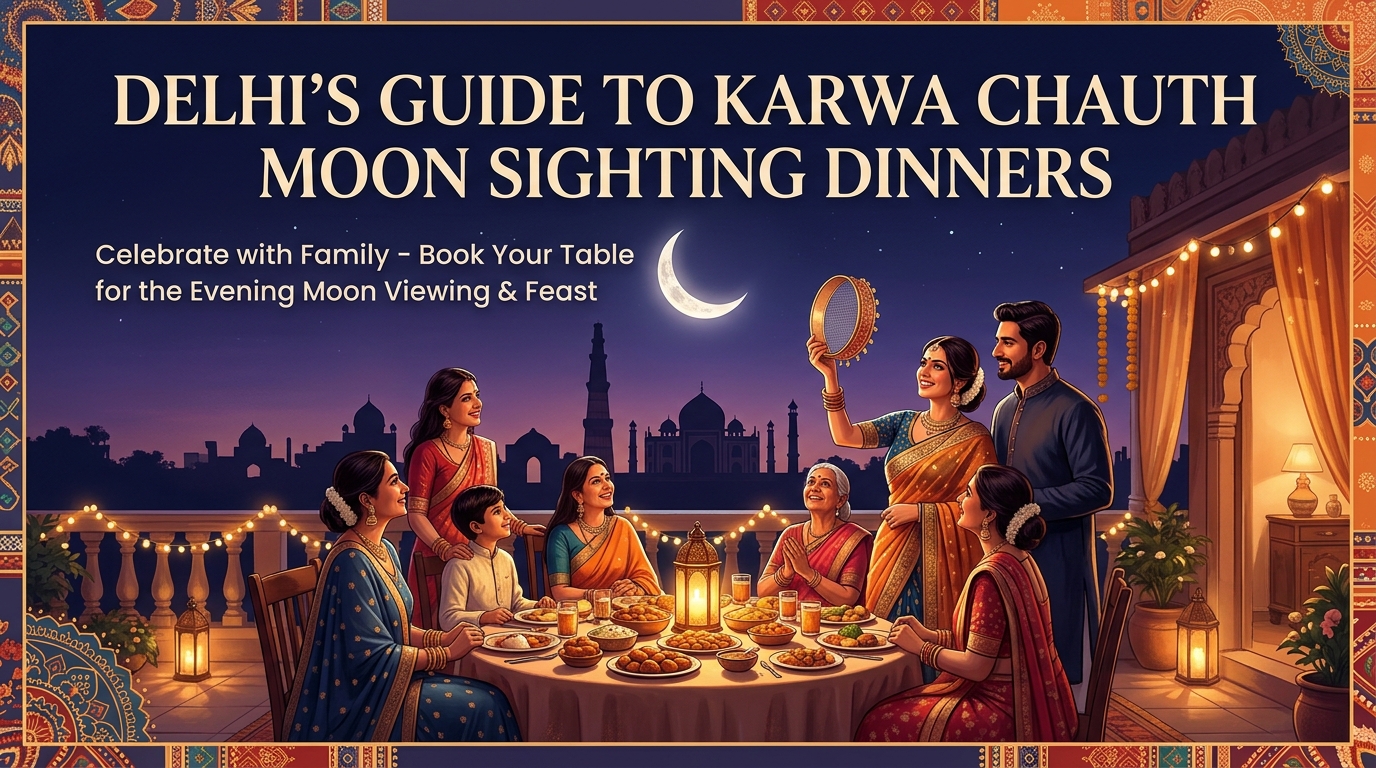
The sighting dinner is the meal that breaks the day's fast, eaten immediately after the moon is sighted and the woman observing the fast completes the ritual of viewing it - traditionally through a sieve, followed by looking at her husband, before taking water and food. Restaurants and hotel dining outlets offering a Karwa Chauth dinner typically build the evening around this exact sequence, holding the meal service until the ritual is complete rather than serving at a fixed hour regardless of moonrise.
The meal itself is usually a full thali or multi-course spread, often richer than an everyday dinner service, reflecting the end of a full day without food or water. Some restaurants add a festive touch with themed table settings or a welcome drink specifically for guests marking the occasion.
Karwa Chauth 2026: Date and Timing
|
Detail |
2026 Information |
|
Karwa Chauth |
Thursday, 29 October 2026 |
|
Fast ends |
At moonrise - exact time varies by location, confirm closer to the date |
|
Dinner service |
Typically begins immediately after moonrise, once the sighting ritual is complete |
What to Check Before Booking a Karwa Chauth Dinner
- Whether the restaurant holds the reservation flexible around moonrise, rather than releasing the table if the guest hasn't arrived by a fixed time.
- Whether a private or semi-private table is available for the sighting moment, since many guests prefer this ritual away from a fully open dining floor.
- What the set menu or thali includes, and whether it can accommodate dietary preferences after a full day of fasting.
- Whether a welcome drink or festive touch is included, if that matters to the overall experience being booked.
- How far in advance the restaurant needs the booking confirmed, since Karwa Chauth dinner slots fill quickly in the final week before the date.
Who Books a Karwa Chauth Dinner Specifically
Couples who have already spent the day at home - sargi in the morning, mehendi with family, the fast itself - but want the evening meal handled somewhere else are a large part of this booking pattern. The dinner becomes the one part of the day outsourced to a restaurant, while the rest of the day stays a home observance.
Working women who have fasted through a full working day often prefer this option too - by evening, the priority is simply a good meal without needing to cook, rather than a full day of hotel-based programming.
Extended families sometimes book a shared dinner table specifically for this meal, treating it as the one moment in the day when everyone gathers together, even if the rest of the day was observed separately at home.
Common Mistakes When Booking a Karwa Chauth Dinner
Booking a fixed dinner time without confirming flexibility around moonrise is the most common issue - if the moon rises later than expected, an inflexible reservation can leave a fasting guest waiting past their booked slot, or arriving to a table that has already been released.
Assuming any restaurant table will do is a second mistake specific to this occasion - the sighting ritual itself benefits from at least some privacy, which not every dining floor offers by default.
Booking too close to the date is a third factor. Karwa Chauth dinner reservations, particularly for well-regarded dining rooms, tend to fill within the final week before the festival.
Karwa Chauth Dinner at The Grand New Delhi
The Grand New Delhi's dining outlets in Vasant Kunj - Cascades, DKK, WokTok, and GBar offer a range of settings for a Karwa Chauth sighting dinner, from a formal multi-course dinner to a more relaxed evening setting depending on the size of the group.
For guests booking specifically around the sighting ritual, arranging a semi-private table in advance allows the moment to happen away from the main dining floor, before the group settles into the evening meal together.
Explore The Grand New Delhi
→ View our full Karwa Chauth celebration guide
Frequently Asked Questions
1. What time does a Karwa Chauth dinner usually start?
Dinner service typically begins immediately after moonrise, once the sighting ritual is complete. Exact moonrise time varies by location and should be confirmed closer to the date.
2. Can a restaurant hold a table if the moon rises
later than expected?
Many restaurants will hold a Karwa Chauth reservation flexible around moonrise, but this
should be confirmed directly
with the venue at the time of booking rather than assumed.
3. Is a private table available for the sighting moment?
Some dining venues can arrange a semi-private table for the sighting ritual on request, ahead of the group settling in for the full dinner.
4.What is typically included in a Karwa Chauth dinner menu?
Most venues offer a full thali or multi-course spread reflecting the end of the day's fast, sometimes with a festive welcome drink or themed table setting.
5. How early should a Karwa Chauth dinner table be
booked?
Booking at least a week in advance is advisable, since well-regarded dining rooms tend
to fill quickly in the days
immediately before the festival.